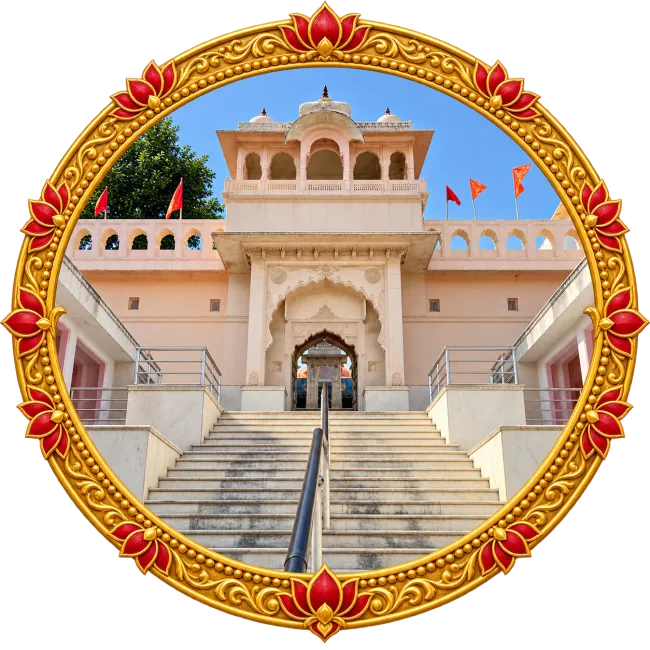
Brahma Temple, Pushkar
Visit Brahma Temple in Pushkar, one of India’s most prominent temples dedicated to Lord Brahma, the creator of the universe. Located near the sacred Pushkar Lake in Rajasthan’s Ajmer district, the temple is known for its rare four-faced idol, red shikhara, marble flooring, mythological importance and grand Kartik Purnima celebrations.
About Brahma Temple Pushkar
Brahma Temple, officially known as Jagatpita Brahma Mandir, is situated in the sacred town of Pushkar, approximately 14 kilometres from Ajmer. The temple is dedicated to Lord Brahma, who is regarded as the creator within the Hindu Trimurti of Brahma, Vishnu and Mahesh.
Although temples dedicated to Lord Vishnu and Lord Shiva are found throughout India, temples where Lord Brahma is worshipped as the principal deity are comparatively rare. Pushkar’s Brahma Temple is considered the most prominent among them.
The temple stands close to Pushkar Lake, which is regarded as Tirtha Raj—the king of sacred pilgrimage places. Traditionally, devotees first bathe in or offer prayers at Pushkar Lake and then visit Brahma Temple for darshan.
The main sanctum houses a four-faced idol of Lord Brahma accompanied by Goddess Gayatri. Each face of Brahma is associated with one of the four directions and symbolically represents the four Vedas.
History of Brahma Temple Pushkar
The religious history of Brahma Temple is considered much older than its present architectural structure. According to tradition, the original shrine was established at the place where Lord Brahma performed a sacred yajna.
The temple is believed to have been renovated by the Hindu philosopher Adi Shankaracharya during the 8th century. The present medieval structure is generally associated with the 14th century.
During later periods, the temple underwent repairs and additions. Maharaja Jawat Raj of Ratlam is credited with restoring and modifying parts of the temple while preserving its original architectural character.
Pushkar experienced several periods of political change, during which a number of its temples were damaged and subsequently reconstructed. Despite these changes, the religious importance of Brahma Temple continued, and it remains the central shrine of Pushkar’s pilgrimage tradition.
Who Built Brahma Temple and When?
The original foundation of Brahma Temple is connected with ancient religious tradition, and no single historical date can be assigned to its earliest form.
The documented architectural history indicates the following stages:
The present temple therefore reflects several periods of religious patronage, reconstruction and restoration rather than the work of only one builder.
Legend of Brahma Temple and Pushkar
According to Hindu mythology, Lord Brahma wished to perform a yajna at an auspicious place. While searching for a suitable location, he released or dropped a lotus flower from his hand. The flower landed at three places, and water emerged there, creating the sacred Pushkar lakes.
The word Pushkar is commonly understood through the Sanskrit words “Pushpa,” meaning flower, and “Kar,” meaning hand. The name therefore refers to the lotus that fell from Lord Brahma’s hand.
Lord Brahma selected Pushkar as the location for his yajna. His wife, Goddess Savitri, was required to be present, but she could not arrive at the appointed time. Because the ritual had to begin within an auspicious period, Brahma married Goddess Gayatri and performed the yajna with her.
When Goddess Savitri arrived and discovered that the ceremony had begun with Gayatri, she became angry and cursed Brahma. According to the popular legend, the curse limited the number of places where Lord Brahma would be worshipped.
Pushkar was exempted because the yajna had been performed there. This story explains the special importance of Brahma worship in Pushkar and the rarity of major Brahma temples elsewhere.
A separate temple dedicated to Goddess Savitri stands on Ratnagiri Hill overlooking Pushkar.
Religious Significance
Brahma Temple is an important pilgrimage destination for devotees seeking knowledge, creative energy, wisdom and spiritual progress. Lord Brahma is associated with creation, the Vedas, knowledge and the beginning of the cosmic cycle.
The four faces of Brahma symbolise:
- The four Vedas—Rigveda, Samaveda, Yajurveda and Atharvaveda
- The four directions
- The complete vision of creation
- Knowledge, wisdom and spiritual awareness
Pilgrims traditionally perform rituals at Pushkar Lake before visiting the temple. Kartik Purnima is considered the most auspicious occasion for bathing in the lake and worshipping Lord Brahma.
Devotees visit the temple to pray for:
- Knowledge and wisdom
- Success in education
- Creative abilities
- Spiritual progress
- Family prosperity
- Peace of mind
- Relief from past karmic burdens
- Blessings for beginning important work
- Guidance in personal and professional life
Special rituals are also performed in Pushkar for ancestors, family welfare and spiritual purification.
Architecture of Brahma Temple
Brahma Temple combines traditional Rajasthani temple architecture with decorative marble elements. Its red shikhara and hamsa symbol make it easily recognisable within Pushkar.
Entrance and Marble Steps
Visitors reach the temple by climbing a flight of marble steps. The elevated entrance separates the sacred space from the surrounding market streets and creates a gradual approach towards the main prayer hall.
Red Shikhara
The temple has a prominent red-coloured shikhara rising above the sanctum. This feature is visible from several areas of Pushkar and has become one of the town’s most recognisable landmarks.
Hamsa Symbol
A figure of the hamsa, or sacred swan, can be seen above the temple. The hamsa is regarded as Lord Brahma’s vehicle and symbolises purity, knowledge and the ability to distinguish truth from falsehood.
Main Mandapa
The pillared assembly hall leads devotees towards the sanctum. Its interior includes religious symbols, traditional decorations and areas where worshippers can offer prayers.
Marble Flooring and Silver Coins
The temple floor contains numerous silver coins donated by devotees. Some of these coins bear the names of donors and their family members and were installed as expressions of faith and gratitude.
Main Sanctum
The sanctum contains the four-faced idol of Lord Brahma. The deity is depicted in a seated posture and is accompanied by Goddess Gayatri.
The four faces of Brahma look towards the four cardinal directions. The idol is decorated with garments, crowns, flowers and ornaments according to the daily worship schedule.
Subsidiary Shrines
The temple complex contains shrines and representations associated with other deities, sages and divine figures. These enhance the temple’s importance as a broader pilgrimage centre rather than only an individual shrine.
Brahma Temple Pushkar Timings
The temple follows different schedules during summer and winter.
Summer Timings
Winter Timings
The traditional Mangala Aarti is connected with sunrise, while Sandhya Aarti is performed after sunset. Consequently, the ceremony schedule may be revised seasonally. Kartik Purnima and Pushkar Fair also have special arrangements.
Best Time for Darshan
For peaceful darshan, visitors should reach between 6:00 AM and 8:00 AM. The temple and surrounding streets are quieter during the early morning.
Evening darshan is best between 5:30 PM and 7:30 PM. Visitors can attend the evening aarti and subsequently visit Pushkar Lake to experience the ghat aarti.
October to March is the most comfortable season because the weather remains pleasant. The Kartik Purnima period offers the most significant religious experience, but it is also the busiest time of the year.
Visitors who prefer fewer crowds should avoid weekends, full-moon days and the principal dates of the Pushkar Fair.
Daily Puja and Aarti
The priests follow established rituals for the worship of Lord Brahma and Goddess Gayatri. Daily ceremonies include:
- Mangala Aarti
- Decoration of the deities
- Mantra chanting
- Flower offerings
- Presentation of bhog
- Sandhya Aarti
- Shayan Aarti
The Mangala Aarti is traditionally performed before sunrise. Sandhya Aarti takes place after sunset, while Shayan Aarti marks the completion of the day’s worship.
Devotees offer their prayers from the main hall and worship areas outside the inner sanctum. Offerings are presented according to the temple’s established customs.
Kartik Purnima and Pushkar Fair
Kartik Purnima is the most important religious occasion at Brahma Temple. According to tradition, Lord Brahma completed his sacred yajna in Pushkar during the month of Kartik.
Thousands of pilgrims visit Pushkar to take a sacred bath in the lake and seek the blessings of Lord Brahma. Special pujas, aartis, devotional programmes and rituals are organised at the temple.
The religious celebration coincides with the famous Pushkar Fair, which presents Rajasthan’s folk traditions, rural culture, handicrafts and livestock heritage. During this period, Pushkar receives an exceptionally large number of visitors.
Those planning a Kartik Purnima visit should arrange transport and accommodation well in advance.
Other Festivals Celebrated
Guru Purnima
Special prayers and spiritual programmes are organised on Guru Purnima. Devotees honour teachers and seek blessings for wisdom.
Diwali
The temple is decorated with lamps and flowers during Diwali. Devotees pray for prosperity, knowledge and a positive new beginning.
Holi
Holi is celebrated enthusiastically throughout Pushkar. Traditional temple worship is performed along with the town’s cultural celebrations.
Navratri
Goddess Gayatri and other forms of divine feminine energy are worshipped during Navratri.
Full-Moon Days
Every Purnima holds special importance in Pushkar. Devotees bathe at the ghats and visit Brahma Temple for darshan.
Amavasya
Religious rituals dedicated to ancestors are performed at Pushkar Lake on Amavasya. Pilgrims subsequently visit the temple to complete their worship.
Offerings and Prasad
Devotees commonly offer:
- Flowers and garlands
- Rose petals
- Coconut
- Fruits
- Sweets
- Incense
- Sacred thread
- Red cloth
- Donations through authorised counters
Rose flowers hold particular importance in Pushkar because the region is famous for rose cultivation. Visitors should use the authorised offering arrangements available at the temple.
Pilgrims should remain cautious of unauthorised individuals offering compulsory puja packages. Rituals should only be arranged after confirming the procedure and charges.
Pushkar Lake Pilgrimage
Brahma Temple and Pushkar Lake form a connected pilgrimage tradition. Many devotees follow this sequence:
- Visit one of the sacred ghats.
- Take a ritual bath or sprinkle lake water upon themselves.
- Offer prayers for ancestors and family welfare.
- Visit Jagatpita Brahma Temple.
- Worship Goddess Gayatri.
- Visit Savitri Temple and other nearby shrines.
Visitors should respect the sanctity of the lake and avoid using soap, shampoo or plastic near the water.
Entry Fee and Visit Duration
There is no general entry fee for visiting Brahma Temple.
Locker or storage arrangements may be available near the temple entrance. Visitors should avoid carrying unnecessary valuables.
How to Reach Brahma Temple Pushkar
The temple is located near Pushkar Lake and is accessible through the main market area of Pushkar.
By Air
Kishangarh Airport is the nearest operational airport and is approximately 40–45 kilometres from Pushkar. Taxis are available from the airport.
Jaipur International Airport is approximately 145 kilometres away and offers wider flight connectivity.
By Train
Ajmer Junction is the nearest major railway station, approximately 14–16 kilometres from the temple. Ajmer is connected with Jaipur, Delhi, Ahmedabad, Mumbai, Udaipur, Jodhpur and other major cities.
Taxis, buses and shared vehicles are available from Ajmer to Pushkar.
By Bus
Regular buses operate between Ajmer and Pushkar. Pushkar Bus Stand is located within a short distance of the temple and main market.
Direct buses to Pushkar are also available from Jaipur and several cities of Rajasthan.
By Road
Pushkar can be reached by private car, taxi or bus through Ajmer. The road crosses the Nag Pahar section before entering Pushkar.
Vehicles are restricted in some narrow market areas near the temple. Visitors may need to walk the final section.
Nearby Places to Visit
Pushkar Lake
Pushkar Lake is surrounded by numerous ghats and is the centre of the town’s pilgrimage tradition.
Savitri Mata Temple
Situated on Ratnagiri Hill, Savitri Temple is dedicated to Lord Brahma’s consort. Visitors can reach it by steps or ropeway.
Gayatri Mata Temple
The Gayatri Temple is associated with Goddess Gayatri, who accompanied Lord Brahma during the sacred yajna.
Varaha Temple
Varaha Temple is dedicated to Lord Vishnu’s boar incarnation and is one of Pushkar’s historically important temples.
Rangji Temple
Rangji Temple combines South Indian, Rajput and Mughal architectural influences and is dedicated to Lord Ranganatha.
Atmateshwar Mahadev Temple
This ancient Shiva temple is known for its distinctive structure and spiritual importance.
Pushkar Market
The market is known for handicrafts, textiles, jewellery, rose products, religious items and traditional Rajasthani goods.
Visitor Guidelines
- Wear modest clothing suitable for a pilgrimage site.
- Remove footwear at the designated counter.
- Follow temple security and mobile-phone restrictions.
- Do not photograph the sanctum without permission.
- Maintain silence inside the prayer hall.
- Use authorised counters for donations and offerings.
- Confirm charges before arranging any special ritual.
- Keep Pushkar Lake and its ghats clean.
- Do not consume alcohol or non-vegetarian food in the sacred town.
- Avoid carrying leather items into restricted areas.
- Reach early during Kartik Purnima.
- Keep valuables secure in crowded markets.
- Respect the instructions of priests and temple management.
- Senior citizens should take care while climbing the marble steps.
Conclusion
Brahma Temple in Pushkar is one of India’s most distinctive and spiritually important temples. Dedicated to Lord Brahma, the creator of the universe, it is closely connected with the origin of Pushkar Lake and the legend of the sacred yajna.
The temple’s four-faced idol, red shikhara, hamsa symbol, marble architecture and ancient traditions create a memorable spiritual experience. Its association with Adi Shankaracharya, medieval structure and restoration by Maharaja Jawat Raj of Ratlam also give it considerable historical importance.
A pilgrimage to Brahma Temple becomes complete when combined with prayers at Pushkar Lake, Goddess Gayatri Temple and Savitri Mata Temple. Whether visiting during the peaceful early morning or the grand Kartik Purnima celebrations, devotees experience the unique religious heritage of Pushkar at Jagatpita Brahma Mandir.