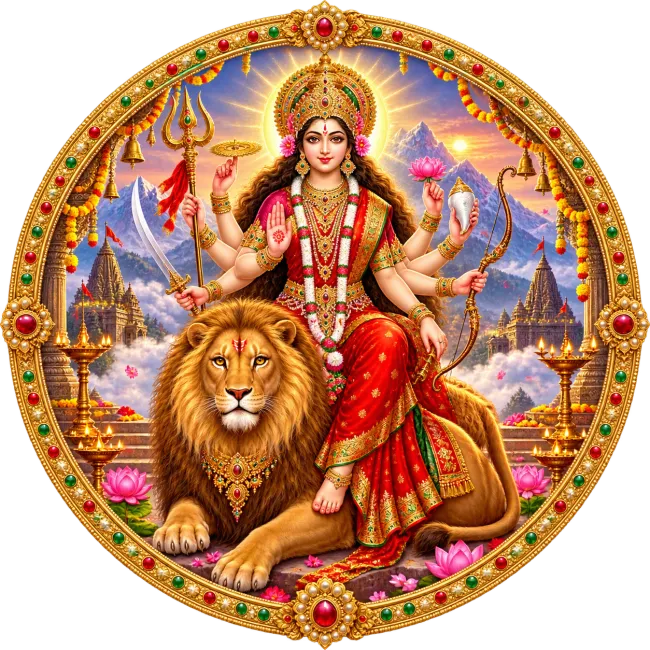
Navratri Mantras and Stuti
Navratri Mantras and Stuti are sacred prayers dedicated to Maa Durga and her nine divine manifestations, collectively known as Navadurga. During the nine auspicious days of Navratri, devotees chant these powerful mantras and recite devotional hymns to invoke the blessings of the Divine Mother. Each mantra is believed to carry divine vibrations that help purify the mind, strengthen the soul, remove negative thoughts, and create a spiritually uplifting atmosphere.
The mantras dedicated to Maa Durga represent courage, protection, wisdom, prosperity, compassion, and victory over evil. Similarly, Durga Stuti glorifies the divine qualities, boundless power, and motherly grace of the Goddess. Reciting these sacred verses with faith and devotion helps devotees develop confidence, concentration, emotional stability, and spiritual awareness.
Navratri Mantras and Stuti are not merely religious recitations; they are a sacred medium through which devotees express gratitude, surrender, and love toward Adi Shakti. Their regular chanting during Navratri is believed to remove fear, confusion, obstacles, and negative energies while inviting peace, strength, happiness, and divine protection into life. Through sincere worship, devotees seek the grace of Maa Durga for success, good health, family harmony, prosperity, and spiritual progress.
Navratri is one of the most sacred and spiritually significant festivals in Hindu tradition. Celebrated for nine nights and ten days, this festival is dedicated to Maa Durga and her nine divine forms—Maa Shailputri, Maa Brahmacharini, Maa Chandraghanta, Maa Kushmanda, Maa Skandamata, Maa Katyayani, Maa Kalaratri, Maa Mahagauri, and Maa Siddhidatri. Each form of the Goddess represents a unique divine quality and teaches devotees the importance of courage, discipline, peace, compassion, wisdom, purity, determination, and spiritual fulfilment.
Chanting Navratri Mantras and reciting Durga Stuti are considered among the most powerful ways of worshipping the Divine Mother during these nine sacred days. A mantra is a spiritually charged combination of sacred sounds and words that helps focus the mind and connect the devotee with divine energy. A stuti is a devotional hymn that praises the beauty, power, compassion, protection, and greatness of the Goddess. Together, mantra chanting and stuti recitation create a deeply devotional experience and help the worshipper feel the presence and grace of Maa Durga.
Devotees may chant the Durga Beej Mantra, Navarna Mantra, Sarva Mangala Mangalye Mantra, Ya Devi Sarva Bhuteshu Mantra, or special mantras dedicated to each form of Navadurga. These sacred mantras are traditionally recited for protection, peace, courage, knowledge, prosperity, success, and freedom from fear. Durga Stuti, on the other hand, describes the Goddess as the universal mother, the source of creation, and the divine power that protects righteousness and destroys negativity.
The spiritual purpose of chanting these prayers is to awaken the inner strength present within every individual. Maa Durga symbolises the victory of divine power over negative forces. Therefore, reciting her mantras with concentration encourages devotees to overcome anger, greed, fear, jealousy, attachment, confusion, and self-doubt. It inspires them to develop patience, confidence, purity of thought, and the determination required to face life’s challenges.
To begin the recitation, devotees should preferably wake up early, bathe, and wear clean clothes. The place of worship should be cleaned and arranged peacefully. An image or idol of Maa Durga may be placed on a clean platform decorated with flowers. A lamp and incense can be lit, followed by the offering of flowers, fruits, sweets, or other sattvic items. After remembering Lord Ganesha and taking a peaceful resolution, devotees may begin chanting the chosen mantra or reciting Durga Stuti.
Mantras may be repeated 11, 21, 51, or 108 times according to the devotee’s faith, time, and ability. A red sandalwood, crystal, or rudraksha mala may also be used for counting repetitions. While correct pronunciation and proper rhythm are beneficial, devotion, sincerity, and purity of intention are equally important. The mind should remain calm, and the mantra should be recited without unnecessary haste. Even a simple prayer offered with complete faith is believed to reach the Divine Mother.
Regular chanting during Navratri helps calm restless thoughts and improves concentration. It fills the home with positive and devotional vibrations while encouraging harmony among family members. Devotees believe that these prayers protect them from negative influences, reduce mental stress, increase confidence, and support progress in personal, professional, and spiritual life. They may also be recited for the well-being of children, elders, and the entire family.
Every day of Navratri is associated with a particular form of Navadurga. Devotees may worship the respective Goddess and chant her specific mantra to understand and receive her divine qualities. For example, Maa Shailputri represents stability, Maa Brahmacharini symbolises devotion and discipline, Maa Chandraghanta provides courage, Maa Kushmanda represents creative energy, Maa Skandamata embodies motherly affection, Maa Katyayani grants strength, Maa Kalaratri destroys fear and negativity, Maa Mahagauri represents purity, and Maa Siddhidatri bestows wisdom and spiritual accomplishment.
Navratri Mantras and Stuti also remind devotees that the Divine Mother is present in every living being as energy, intelligence, compassion, faith, peace, and consciousness. Their recitation therefore becomes a journey of inner transformation rather than only an external ritual. When performed with humility and devotion, this sacred practice helps the worshipper recognise divine energy within and move toward a more balanced, meaningful, and righteous life.
According to Har Ghar Pandit Ji, devotees should select mantras that are appropriate to their purpose and chant them with discipline, patience, and complete faith. The worship should be performed in a clean and peaceful environment, and the devotee should maintain positive thoughts and sattvic conduct throughout Navratri. Those who are unfamiliar with complex mantras may begin with simple and commonly recited prayers dedicated to Maa Durga. If a mantra requires specific initiation, pronunciation, or ritual rules, guidance from a knowledgeable priest is recommended.
Har Ghar Pandit Ji advises devotees not to consider mantra chanting merely a way to fulfil material wishes. Its deeper purpose is to purify thoughts, strengthen faith, awaken inner courage, and establish a loving connection with the Divine Mother. When Navratri Mantras and Stuti are recited with genuine devotion, they can bring peace to the mind, strength to the heart, positivity to the home, and spiritual direction to life. Through this sacred practice, devotees seek the blessings of Maa Durga for health, happiness, protection, prosperity, family harmony, success, and lasting spiritual growth.