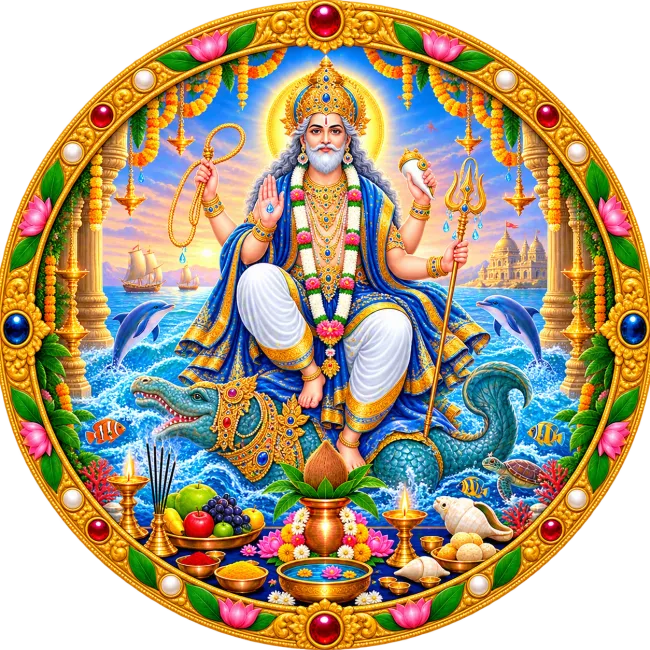
Varun Dev Puja Vidhi
Varun Dev Puja Vidhi is a sacred Hindu worship procedure dedicated to Lord Varun, the powerful Vedic deity associated with water, oceans, rivers, rain, truth, justice, and universal order. Water is considered the foundation of life, and Lord Varun is worshipped as its divine protector and controller. Through this puja, devotees express gratitude for the gift of water and pray for sufficient rainfall, environmental balance, physical purification, mental peace, and protection from water-related difficulties.
The puja generally begins with personal purification, cleaning the worship place, and taking a Sankalp. A Kalash filled with pure water is established as a symbol of Lord Varun’s presence. The devotee then invokes Varun Dev by chanting sacred mantras and offers sandalwood, Akshat, flowers, incense, a lamp, fruits, sweets, and clean water. Varun Dev Stotra, prayers, or Vedic mantras may also be recited during the worship. The ritual concludes with Aarti, Kshama Prarthana, Prasad distribution, and a prayer for the welfare of all living beings.
Performing Varun Dev Puja with devotion is believed to purify the body and mind, remove negative energies, calm emotional disturbances, and bring peace, prosperity, and harmony into life. The worship also encourages people to respect water, conserve natural resources, and maintain balance with nature. It is especially performed to pray for rainfall, seek relief from drought or water-related problems, and request forgiveness for knowingly or unknowingly disrespecting water and the environment.
Varun Dev Puja Vidhi describes the traditional and devotional method of worshipping Lord Varun, one of the most important deities mentioned in the Vedas. Lord Varun is regarded as the ruler of oceans, rivers, rain, clouds, and all forms of water. He is also associated with truth, morality, justice, discipline, and Rita—the divine order that maintains balance throughout the universe. His worship represents both external purification through water and internal purification through truthful thoughts, words, and actions.
The puja should ideally be performed in a clean and peaceful place. After taking a bath and wearing clean clothes, the devotee cleans the worship area and places an image or symbol of Lord Varun on a clean platform. A Kalash is then filled with pure water and decorated with sandalwood, flowers, Akshat, mango leaves, and a coconut. The Kalash represents purity, prosperity, life energy, and the sacred presence of Varun Dev. Gangajal, if available, may also be added to the Kalash water.
The worship begins by remembering Lord Ganesha and praying for the successful completion of the ritual. After this, the devotee takes a Sankalp by stating the purpose of performing the puja. The Sankalp may be taken for family well-being, sufficient rainfall, relief from water-related problems, purification of the mind, environmental harmony, or spiritual progress. Lord Varun is then respectfully invoked through meditation and mantra chanting.
After the invocation, devotees offer sandalwood paste, Kumkum, Akshat, sacred thread, flowers, garlands, incense, a ghee lamp, fruits, sweets, coconut, and clean water. Each offering should be made with devotion, gratitude, and a peaceful mind. The Varun Dev Mool Mantra, Varun Gayatri Mantra, Stotra, or other sacred prayers may be recited according to the devotee’s tradition and ability. Chanting the mantra 11, 21, or 108 times is generally considered auspicious.
During the puja, devotees may pray for purity of thoughts, forgiveness of mistakes, sufficient rainfall, protection from floods and drought, and the conservation of water resources. Since Varun Dev is also connected with truth and justice, worshippers seek his blessings to remain honest, disciplined, responsible, and righteous in their daily lives. The puja teaches that spiritual worship should be accompanied by responsible actions, such as preventing water pollution, avoiding unnecessary wastage, and protecting rivers, lakes, ponds, and other natural water sources.
After completing the mantra chanting and offerings, Varun Dev Aarti is performed. The devotee then recites Kshama Prarthana, requesting forgiveness for any errors made during the worship. Prasad is offered and later distributed among family members and other devotees. The water kept in the Kalash may be respectfully sprinkled around the home for purification or offered to plants and trees. It should not be thrown into an unclean place.
Varun Dev Puja can be performed on auspicious occasions, during periods of insufficient rainfall, before beginning water-related activities, or whenever a devotee wishes to express gratitude toward nature. It may also be performed during important religious ceremonies in which Kalash Sthapana and water worship have special significance. The puja can be conducted at home with simple devotion or performed with detailed Vedic rituals under the guidance of a knowledgeable priest.
The spiritual significance of Varun Dev Puja goes beyond praying for rain or protection from water-related difficulties. Water symbolizes purity, flexibility, emotional balance, nourishment, and the continuous flow of life. By worshipping Varun Dev, devotees pray for the cleansing of negative thoughts, harmful habits, fear, anger, and emotional instability. The ritual inspires them to adopt truthfulness, compassion, self-control, and respect for all forms of life.