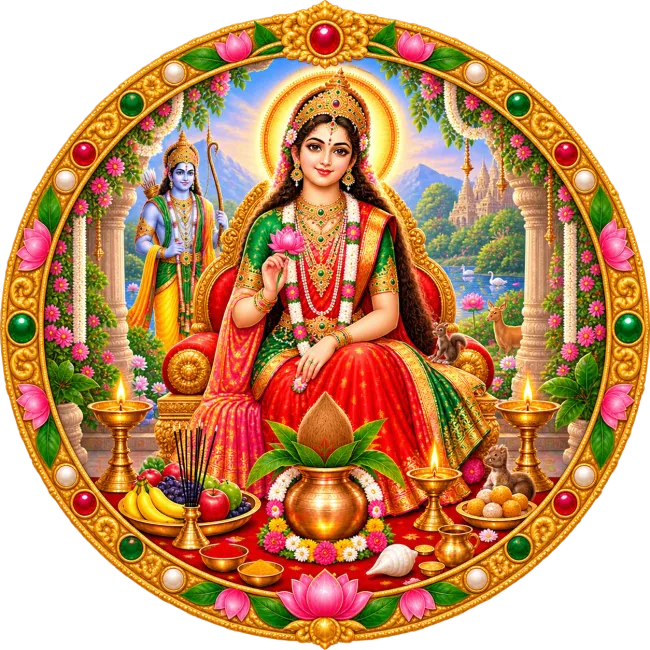
Sita Mata Aarti
Sita Mata Aarti is a sacred and deeply devotional prayer dedicated to Goddess Sita, the divine consort of Lord Shri Rama and one of the most revered figures in Hindu tradition. Also lovingly known as Janaki, Vaidehi, Maithili, and Siya, Mata Sita represents purity, devotion, patience, sacrifice, compassion, courage, dignity, and unwavering faith in Dharma. The Aarti is performed to express love and reverence toward Mata Sita and to seek her divine blessings for peace, prosperity, happiness, family harmony, spiritual strength, and protection from difficulties.
Devotees perform Sita Mata Aarti during daily worship as well as on important religious occasions such as Sita Navami, Ram Navami, Vivah Panchami, Ram-Sita Puja, and other auspicious festivals. The lighting of the diya and singing of the Aarti create a peaceful devotional atmosphere in which devotees remember the virtues, sacrifices, and divine character of Mata Sita.
The life of Goddess Sita provides timeless lessons about remaining patient, compassionate, truthful, and spiritually strong even during difficult circumstances. Her devotion to Lord Rama and commitment to righteousness make her an inspiring symbol of faith and inner strength. By reciting or listening to Sita Mata Aarti with sincere devotion, worshippers pray for the removal of negativity, greater peace of mind, harmony in relationships, and the strength to follow the path of truth and Dharma.
Sita Mata Aarti is therefore more than a devotional song; it is a spiritual expression of gratitude and surrender to Mata Sita. Regular worship of Sita-Ram can help devotees cultivate positive qualities such as patience, humility, compassion, devotion, self-discipline, and faith while creating a spiritually uplifting environment in the home.
Sita Mata Aarti is a beautiful Hindu devotional hymn sung in praise of Goddess Sita, the beloved consort of Lord Shri Rama. Mata Sita occupies a highly respected position in Hindu spirituality and is remembered as an embodiment of purity, virtue, devotion, sacrifice, patience, courage, and unconditional love. She is also known by several sacred names, including Janaki, Vaidehi, Maithili, Siya, and Janaknandini. Her divine life and character continue to inspire devotees to live according to the principles of truth, righteousness, compassion, dignity, and devotion.
According to Hindu tradition, Mata Sita was the daughter of King Janaka of Mithila and later became the divine consort of Lord Rama. Her story forms an essential part of the Ramayana and represents extraordinary devotion, patience, spiritual strength, and commitment to Dharma. Despite facing numerous hardships throughout her life, Mata Sita remained steadfast in her values and faith. For this reason, devotees remember her not only as the consort of Lord Rama but also as a powerful symbol of inner strength, resilience, purity, and spiritual wisdom.
Performing Sita Mata Aarti is considered an important way of expressing devotion and gratitude toward the Goddess. During the Aarti, devotees traditionally light a diya and offer it before the image or idol of Mata Sita and Lord Rama while singing sacred verses in their praise. Flowers, incense, sweets, fruits, and other traditional offerings may also be presented according to personal or family customs. The devotional atmosphere created during the Aarti encourages worshippers to focus their minds on Sita-Ram and experience a deeper sense of peace and spiritual connection.
Sita Mata Aarti can be performed during regular morning or evening worship and on special religious occasions. It holds particular significance during Sita Navami, which celebrates the appearance of Mata Sita, as well as Ram Navami, Vivah Panchami, Ram-Sita Puja, and other festivals associated with Lord Rama and Goddess Sita. Families may also include the Aarti during religious ceremonies, bhajans, Ramayana recitations, and other auspicious gatherings.
Devotees traditionally pray to Mata Sita for happiness, prosperity, peace, family unity, marital harmony, wisdom, courage, and protection from negative influences. Reciting the Aarti with sincere faith can help create a calm and positive atmosphere while encouraging the devotee to develop patience, kindness, humility, compassion, and devotion. The spiritual significance of the Aarti lies not only in seeking blessings but also in remembering and adopting the virtues demonstrated by Mata Sita throughout her life.
The story of Mata Sita teaches that true strength is not limited to physical power. Her courage, patience, self-respect, compassion, and unwavering commitment to righteousness demonstrate the importance of maintaining one's values even during difficult situations. Remembering her during prayer can inspire devotees to face life's challenges with greater faith, dignity, and emotional strength.
For married couples and families, the worship of Sita-Ram also represents devotion, mutual respect, responsibility, and commitment to Dharma. Devotees often pray before Mata Sita and Lord Rama for harmony, understanding, love, and stability within the family. In this way, Sita Mata Aarti becomes both an act of spiritual worship and a reminder of the values that contribute to a peaceful and meaningful family life.
Regularly listening to or performing Sita Mata Aarti can become an enriching part of daily spiritual practice. The light of the Aarti diya symbolizes divine knowledge, purity, hope, and the removal of spiritual darkness. The devotional verses encourage worshippers to turn their attention away from everyday distractions and toward prayer, gratitude, and remembrance of the divine.
Above all, Sita Mata Aarti celebrates the sacred qualities represented by Goddess Sita. It reminds devotees of the importance of purity of thought, patience during adversity, compassion toward others, devotion to God, and commitment to truth and righteousness. By offering the Aarti with a sincere heart, devotees seek the grace of Mata Sita and Lord Shri Rama and pray for a life filled with peace, positivity, spiritual wisdom, happiness, and devotion.
Whether performed individually at home, together with family members, or during a temple ceremony, Sita Mata Aarti provides devotees with an opportunity to connect spiritually with Mata Sita. Chanting the Aarti with faith and understanding can transform the worship into a meaningful spiritual experience and strengthen one's devotion toward Sita-Ram.