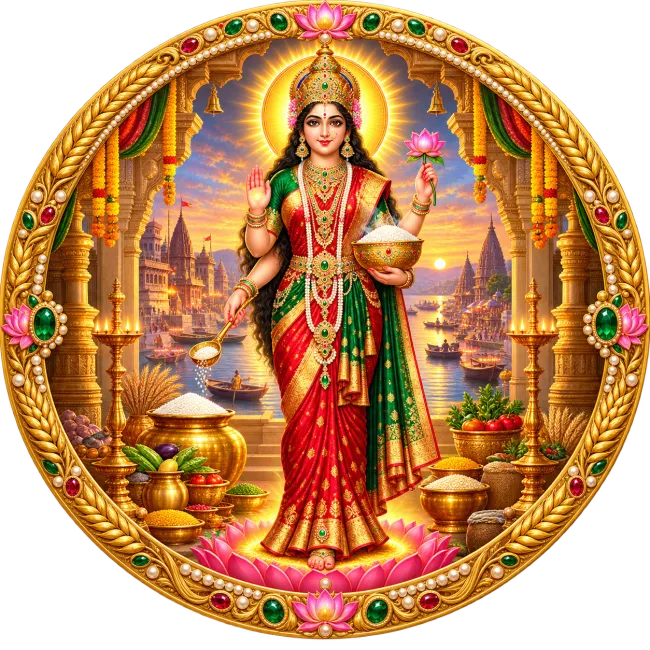
Annapurna Mantra
Annapurna Mantra is a sacred and powerful prayer dedicated to Goddess Annapurna, the divine embodiment of food, nourishment, abundance, prosperity, and maternal care. Maa Annapurna is regarded as a compassionate form of Goddess Parvati who ensures that her devotees never suffer from hunger or a lack of essential resources. Chanting the Annapurna Mantra with faith is believed to attract her blessings, remove scarcity, and create an atmosphere of peace, happiness, and prosperity in the home.
The mantra expresses gratitude to the Goddess for providing the food and energy necessary to sustain life. Its regular recitation encourages devotees to respect food, avoid wastage, and remember the divine source behind every meal. It is believed to purify the mind, promote positive thoughts, and develop contentment, humility, compassion, and generosity. Devotees pray to Maa Annapurna not only for material nourishment but also for wisdom, emotional strength, and spiritual fulfilment.
The Annapurna Mantra may be chanted in the morning, before preparing meals, or before eating. Reciting it in a clean and peaceful place with sincere devotion can help strengthen one’s connection with the Goddess. Devotees may light a lamp, offer flowers, fruits, grains, or freshly prepared food, and then chant the mantra while focusing on Maa Annapurna’s compassionate form.
The deeper message of the Annapurna Mantra is that true prosperity is not measured only by wealth but also by good health, inner satisfaction, family harmony, and the ability to help others. It inspires people to share food with those in need and treat every meal as a sacred blessing. Through the grace of Maa Annapurna, devotees seek a life filled with nourishment, gratitude, stability, peace, and spiritual growth.
Maa Annapurna is considered a benevolent form of Goddess Parvati and the divine provider of food and nourishment. The Annapurna Mantra is chanted to seek her blessings for abundance, good health, happiness, and freedom from hunger or financial hardship. Regular recitation is believed to fill the home with positive energy, strengthen feelings of generosity and contentment, and promote the well-being of the entire family.
Devotees may chant the mantra in the morning, before preparing food, or before eating a meal. For better concentration, one can sit in a clean and peaceful place, light a lamp, offer flowers or food to Maa Annapurna, and chant with sincerity. Beyond material prosperity, the mantra also inspires spiritual nourishment by developing humility, gratitude, compassion, and respect for food. Maa Annapurna’s grace teaches that true abundance lies not only in receiving but also in sharing food and helping those in need.